

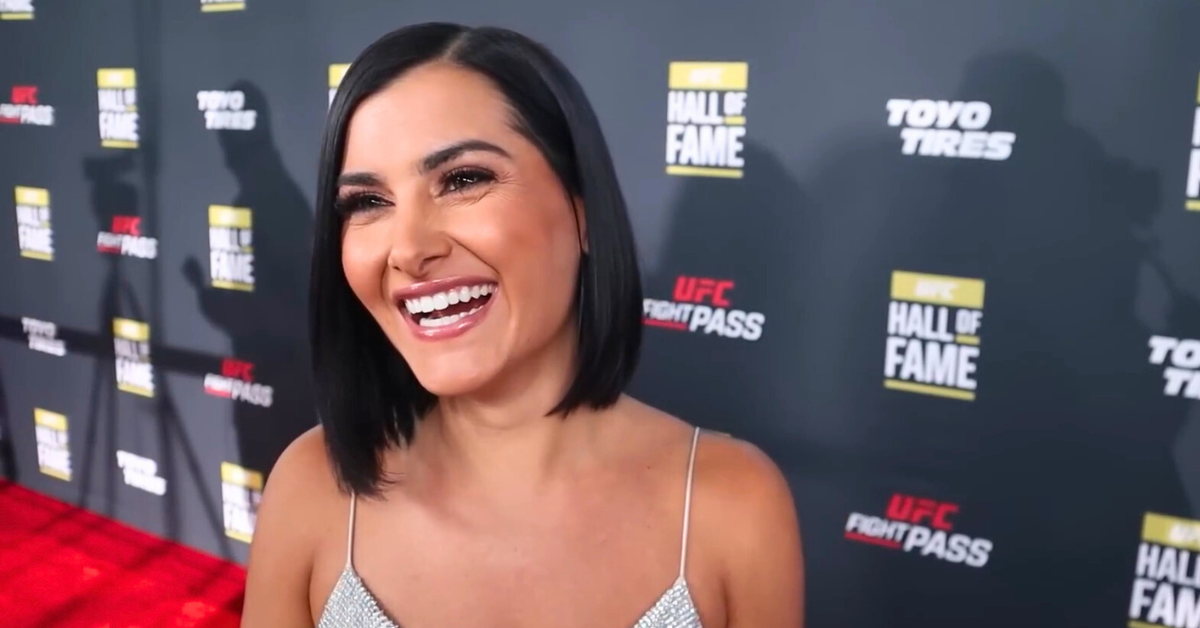
Megan Olivi has been a core a part of UFC broadcasting for nicely over a decade, and her current interview with Fighters Solely gives a uncommon take a look at how she approaches the job, the strain of the brand new Paramount+ period, and the non-public line she walks between being a mom, a reporter, and a visual feminine determine in sport.
Megan Olivi Talks The shift to the Paramount+ period
Because the UFC’s U.S. rights moved from ESPN to Paramount+ and CBS, many followers anticipated main adjustments in presentation and manufacturing. Olivi stated that, from the within, the day‑to‑day workflow and group construction really feel acquainted, however the degree of assist and funding from the brand new companions has been instantly noticeable.
A transparent addition has been the common hour‑lengthy pre‑present on Paramount+, a format Olivi is snug with from the Fox years, and a extra outstanding position for Kate Scott on the host desk alongside former champions like Michael Bisping, Dominick Cruz and Chris Weidman. “The assist from Paramount from day one has actually been a breath of contemporary air,” Olivi stated.
On the field, Olivi’s position has expanded barely because the UFC experiments with extra host‑model responsibility. For numbered occasions she stays the first reporter, however for a lot of Struggle Nights she can be internet hosting the weigh‑in present, the pre‑present, and the submit‑present, which lets her form the narrative round a number of fights moderately than only one principal occasion.
She credited head producer Zach Handido with driving many of the creative changes, from in‑cage pre‑fight analysis segments to more integrated sponsor features that sometimes place her on top of the Octagon with commentary coming in from different hosts. One of many extra delicate however significant shifts is the usage of coaches and coaching companions within the locker room, which she feels provides viewers deeper perception than customary combat‑day interview tropes.
“I really enjoy talking to the coaches. Greg Jackson was the first guy I talked to in a locker room and I think: who better for a general fan to hear from than someone like Greg Jackson as to why he thought his athlete was going to win.”
Why coaches and team‑mates matter
Olivi has long made it a point to speak with coaches and training partners, not just fighters, because athletes are often exhausted, emotionally drained, or still in the space of “punching the clock” on fifth‑day media. For someone like Morab “Vet” Gvern, that means leaning on John Wood, whose honest camp assessments historically line up with what happens in the Octagon.
She pointed out that fighters also tend to be more understated about themselves, which is where coaches and teammates can share stories the athlete would not. “That’s an angle that always has to be uncovered,” she said. “It’s extra insight and genuinely great conversation.”
Being a woman in the broadcast spotlight
She stressed that the UFC has led the way in putting women in central roles: female fighters headline cards, and women like Laura Sanchez, Kate Scott and herself are part of the main broadcast team not as tokens but as credentialed voices. “I think we’re really fortunate that the athletes set the example,” she said. “We see women headlining cards, and there is equality across the board for male and female in the UFC.”
She also acknowledged that, whether male colleagues feel the same or not, she feels she must “earn” the job every single week. For her, that means more research, more creative pitches, and a constant effort to be the best storyteller in the room, regardless of gender or background.
“I just feel like I have to earn that every single week… I’m not resting on laurals. It’s every single week, whether it’s a massive card or a Fight Night in the Apex, the amount of effort is still the same.”
The emotional weight of two “good guys” in a title fight
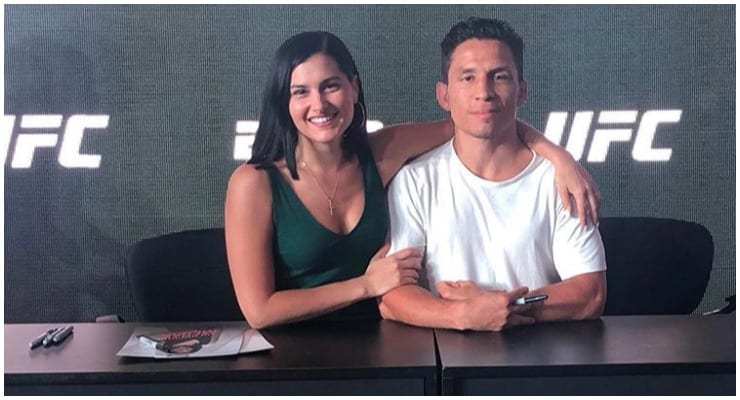
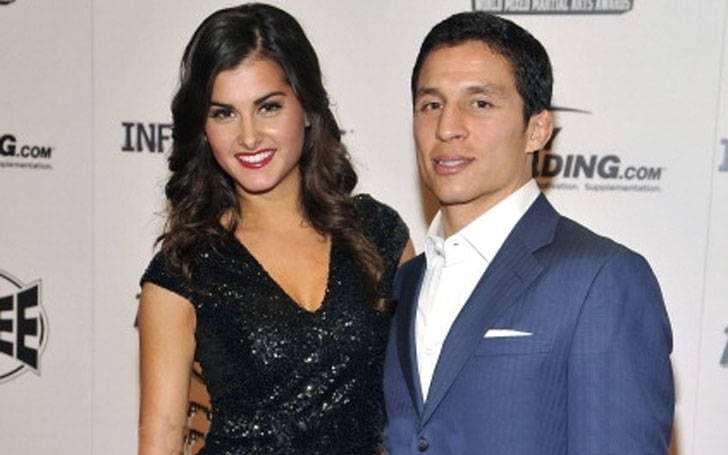
When the topic turned to the upcoming Charles Oliveira vs. Max Holloway title combat, Olivi was candid about how onerous it feels to observe two fighters she genuinely likes go head‑to‑head. She admitted that the one time she really cared about combat outcomes was when her husband, Joseph Benavidez, was competing.
Now, when she watches two revered fighters like Oliveira and Holloway, what stands out is that they’re each “good guys,” dads who’re persistently skilled with the crew. “I’m going to have a tough time watching it,” she stated. “Somebody’s not going to get their hand raised and it’s devastating for them, irrespective of the way it appears to be like from the surface.”
Working through pregnancy and setting an example
Olivi worked her last UFC show about 10 days before giving birth, and she has said publicly that she entered the third trimester healthy enough to keep going, with her doctor’s clearance and UFC’s blessing. She described those late‑pregnancy events as long and physically demanding, but also empowering.
She added:
“I’ve had people try to lick me when I was pregnant. I was actually super scared, completely by accident. At one event in Miami, a security guard sort of pressed his hand against my pregnant stomach, and I just remember being so shocked. I somehow finished the report and then burst out crying off‑camera. There’s a lot of stuff happening around my vision as I’m trying to deliver that memorized report into the camera with as much respect for each athlete as I can.”
Arena rehearsals for big cards often start at 10 a.m., and she frequently spent 13 hours on site for a single fight night. When one of the main events went long, she simply handed her last interview to colleague Brett Okamoto and went home.
For her, the experience was also a quiet statement to younger women and girls who look up to her. She wants them to know that a career in sports broadcasting is possible without compromising integrity, but it requires a long, step‑by‑step process: college, then a master’s, then years of grunt work in smaller roles.
“I went to college, then I got my master’s because I realized I wanted to work in broadcasting and should have a degree to back it up. Then I started by getting people coffee and printing out scripts at 4:30 in the morning.”
Responsibility, visibility, and the future
Olivi said she feels a responsibility to her own nieces and nephews, and to young women to be an example of someone who climbed right into a excessive‑visibility position the “proper method” and nonetheless retained her identification. She pushed again on the concept that the trail is fast or straightforward, particularly when social media makes careers look in a single day.
Her message is apparent: it’s doable to be ready of authority, to be visibly pregnant on large levels, and nonetheless be taken severely if the work is finished persistently and respectfully.
“I need younger women to comprehend it’s doable and also you don’t need to decrease your requirements or compromise your morals. You’ll be able to nonetheless be very a lot you and discover success. It’s simply going to take quite a lot of onerous work.”
