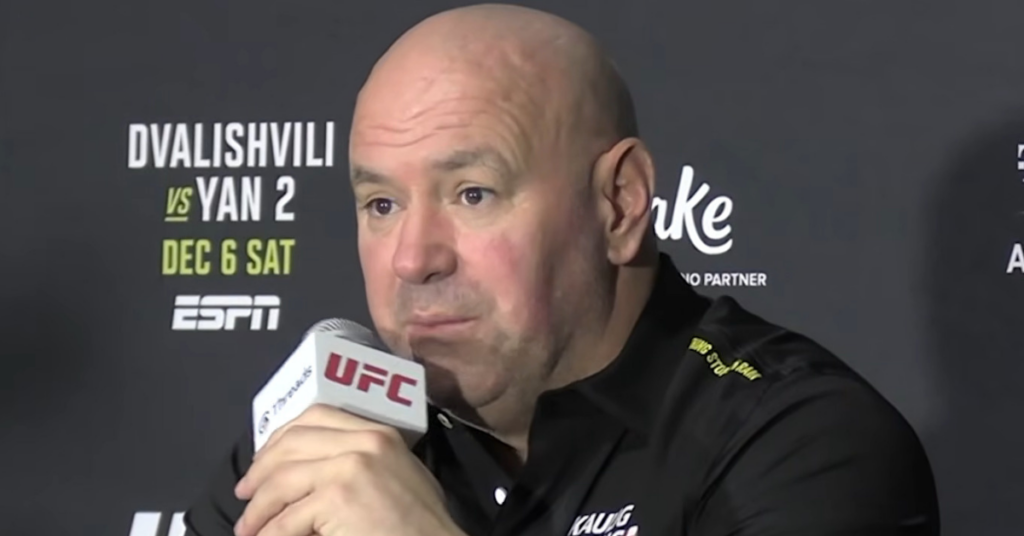

UFC president Dana White stirred up a wave of on-line pushback after criticizing the best way males talk about psychological well being publicly. White defined that he dislikes what he calls “males’s psychological well being tradition,” arguing that males shouldn’t share struggles on social media as a result of it comes throughout as unattractive to each different women and men . His reasoning hinged on the concept males’s major function is being a provider, which he believes turns into compromised once they publicly air difficulties.
Dana White Faces Criticism After Feedback on Males’s Psychological Well being and Masculinity
Dana White said:
“I hate this complete males’s psychological well being stuff that they speak about. Sadly, whenever you’re a person, you’re the supplier, you’ll be able to’t be that man posting on social media, oh I had a nasty day and I’m so unhappy. It’s unattractive to different males, not to mention ladies.”
The remark didn’t sit properly with a number of high-profile voices. Brad Stulberg, who wrote “The Manner of Excellence,” fired again by stating that males die by suicide at 4 instances the speed of girls, a niche he linked on to males’s reluctance to hunt assist. Stulberg initially referred to as White “an fool,” although he later clarified he meant the concept itself was idiotic, not the individual. His follow-up addressed what occurs when males bottle every thing down: they grow to be offended and take it out on the individuals round them, which he described because the precise weak spot in masculinity.
“Males die by suicide at 4x the speed of girls and one of many largest drivers of that’s that males are much less prone to ask for assist. Dana White is proof you could be very wealthy and nonetheless an fool… simply refuse to play into the narrative that looking for assist makes you weak or unattractive. I believe what truly occurs is that quite a lot of males who shove their shit down find yourself changing into very offended and taking it out on the ladies and kids of their lives, which is lame as shit and what truly makes for a weak man.”
Ramit Sethi, host of Netflix’s “The best way to Get Wealthy,” took the chance to reframe masculinity itself. He challenged the concept being a supplier means incomes extra money, and questioned whether or not males even want to suit that label in any respect. Sethi described how remedy helped him increase his emotional vary past anger, which deepened his relationships together with his spouse and mates. He framed redefining masculinity as a selection, not one thing society ought to dictate.
“You may be blissful, foolish, grateful, and love enjoyable. Conventional masculinity reveals a grumpy man who’s irritated together with his household and complains at Disneyland (“Can’t imagine now we have to spend all this cash”). What in the event you selected to be a goofy loving one that your loved ones loved being round? What in the event you LOVED being round individuals as an alternative of claiming “I hate individuals” and constructing a person cave to isolate your self in? You possibly can select your character. Society doesn’t personal you.”
Scott Snyder, the comedian guide author identified for his Batman runs, additionally weighed in on the controversy. Snyder has spoken overtly for years about his personal battles with anxiousness and melancholy, courting again to his faculty years. He emphasised that males opening up about psychological well being challenges deserves assist, not judgment. His stance got here from direct expertise, he’s been on medicine since his late teenagers and attributes a lot of his restoration to remedy {and professional} help.
“This sort of stuff is so fucked up. As somebody who has handled psychological well being points up to now (anxiousness, melancholy), males reaching out to others about their psychological well being struggles ought to be supported and celebrated. To guage asking for assist as unattractive? rubbish individuals.”
The pushback in opposition to White‘s feedback ties right into a dialog about how masculinity will get outlined in society. The strain right here isn’t actually about whether or not males ought to work laborious or be self-sufficient, it’s whether or not asking for assist disqualifies somebody from these issues. Stulberg’s level about offended males hurting their households, and Sethi’s suggestion that emotional consciousness creates stronger relationships, each problem the belief that vulnerability and power are opposites. Snyder’s lived expertise lends weight to the argument that looking for assist doesn’t make somebody weak; in actual fact, it is perhaps what permits males to remain alive and current of their lives.