

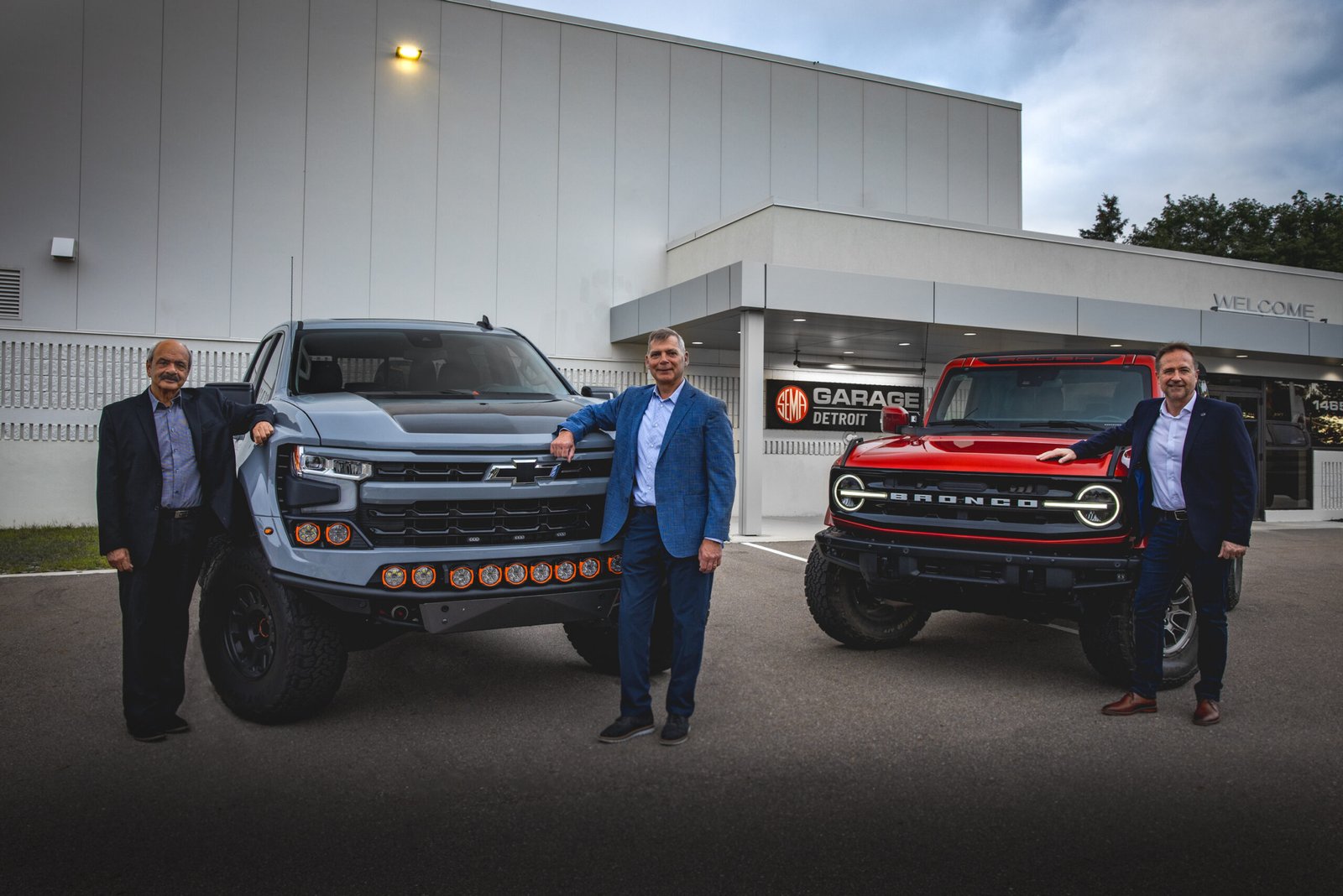
Willem Groenewald, FIA Secretary Common for Mobility and Sustainability, shares his ideas following his latest journey to Detroit with one of many FIA’s latest Members, SEMA
With over 275 million registered autos and 229 million licensed drivers, the USA is likely one of the most influential mobility markets on this planet. But additionally it is a rustic the place highway visitors accidents stay a number one reason for loss of life, with round 40,000 fatalities every year. This actuality underscores why collaboration between regulators, business, and world companions is crucial to shaping a safer and extra sustainable future for mobility.
Final week, I joined FIA Deputy President for Mobility Tim Shearman and FIA Area III President Frank Fotia for a two-day programme in Detroit with the Speciality Gear Market Affiliation (SEMA), one of many latest members of the FIA neighborhood. Detroit, the cultural residence of the American automotive business, offered the right backdrop for conversations about how world cooperation can speed up progress.
Our agenda mirrored the breadth of innovation within the sector:
- On the Transportation Analysis Heart (TRC), we explored superior work in automation, ADAS, connectivity, and electrification. As North America’s largest impartial automotive testing facility, TRC highlights the size of transformation reshaping mobility. These applied sciences are shifting quickly from prototypes to mainstream deployment, elevating new questions round regulation, interoperability, and shopper belief.
- Our assembly with the U.S. Division of Transportation and the Nationwide Freeway Visitors Security Administration (NHTSA) bolstered a shared precedence: saving lives. With 1.19 million individuals killed on the world’s roads yearly, nations can’t afford to develop highway security alone. It have to be addressed by means of world collaboration, constant requirements, and cross-sector partnerships that flip technological progress into real-world influence.
- At SEMA Storage Detroit, we spoke immediately with business specialists from our Member Membership on superior car testing, aftermarket improvement, emissions testing and management, and regulatory priorities. This cutting-edge laboratory is an area the place innovation turns into actuality, with concepts not simply mentioned, however validated, scaled, and ready for the highway, balancing regulatory wants with shopper ardour and demand.
What united these conversations is an easy precept: mobility transformation should serve individuals first, the world over.
As mobility undergoes its most profound transformation in a century, we should guarantee shoppers stay on the centre of each determination. Whether or not in electrification, related autos, or security frameworks, our accountability is to construct belief, guarantee fairness, and ship on the promise of protected, sustainable, and modern mobility.
The U.S. market is central to this transformation. Partnerships just like the one between the FIA and SEMA assist bridge world views with native experience, aligning priorities and accelerating progress.
The federation’s ongoing work through the FIA Street Security Index, supported by the FIA Basis, is seeing elevated engagement throughout the U.S. in each the private and non-private sectors. In Could this 12 months, the New York Metropolis Division of Citywide Administrative Providers (DCAS) grew to become the primary municipal fleet on this planet to undertake this worldwide framework for measuring and bettering highway security efficiency, becoming a member of the likes of Amazon, Waymo, and Uber.
However persevering with this momentum requires management:
- Policymakers should prioritise forward-looking regulation that retains tempo with innovation
- Trade leaders and OEMs should decide to shared requirements, clear testing and cross-sector collaboration
- And collectively we should hold security, sustainability, and accessibility on the coronary heart of each mobility resolution
The alternatives we make right this moment will outline the subsequent century of mobility. By way of collaboration, management, and innovation, we have now the chance and the accountability to ship a future that’s not solely technologically superior but in addition safer, cleaner, and smarter for everybody.
