

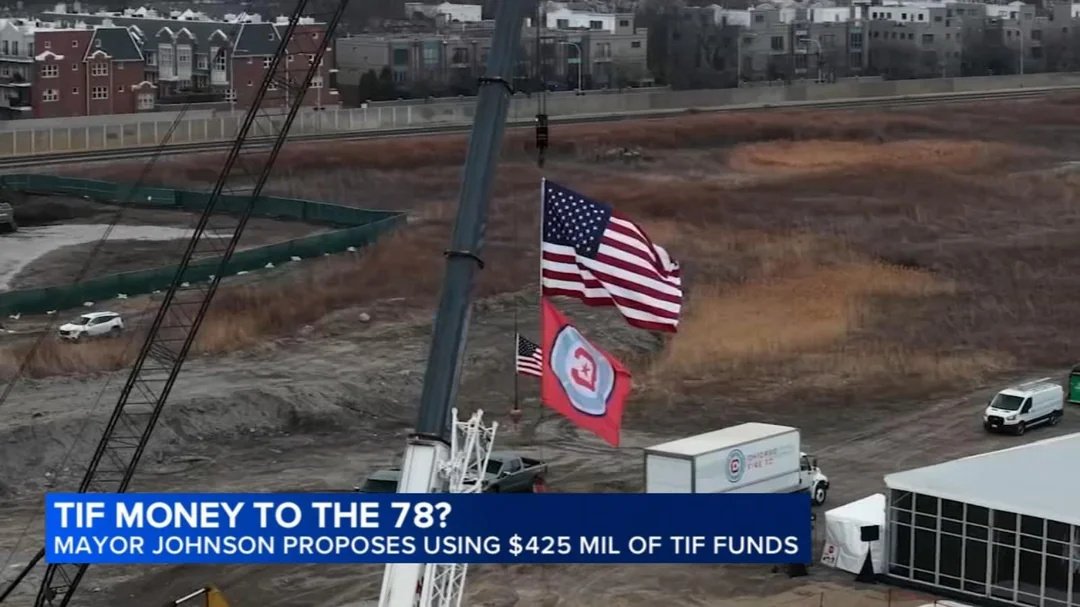
Final 12 months, the proprietor of the Chicago Hearth, Joe Mansueto, introduced that the MLS membership was shifting ahead with plans to construct a brand new stadium. Whereas the prices various between $650M and $750M, the stadium could be “privately-funded,” in response to Mansueto. Native media and different information shops praised Mansueto for not forcing prices onto taxpayers.
“My private view is that stadiums should not an incredible funding…They’re large, pricey to keep up, sit empty more often than not. And so to the extent that they create worth, most of that accrues to the sports activities crew, not the municipality. So to me, it’s truthful that the sports activities crew ought to personal it. Furthermore, right here in Illinois, within the Metropolis of Chicago, our funds are strained. Academics need more cash, legislation enforcement wants cash, pension obligations. Our metropolis and state don’t have the funds, to be candid, and so to me, we might privately finance it.” — Joe Mansueto, New York Times, 10/17/24
The Chicago Solar-Instances referred to as Mansueto an “outlier among Chicago sports moguls for his willingness to bankroll his own…$750 million stadium”. Different information shops claimed that because of Mansueto, the stadium may now be constructed “at no cost to the taxpayers and the city.” Yahoo Finance wrote that as a result of Mansueto was “self-funding a…new stadium”, he would subsequently have the ability to “side-step red tape and bureaucracy” as a result of he wasn’t “asking the city for money.”

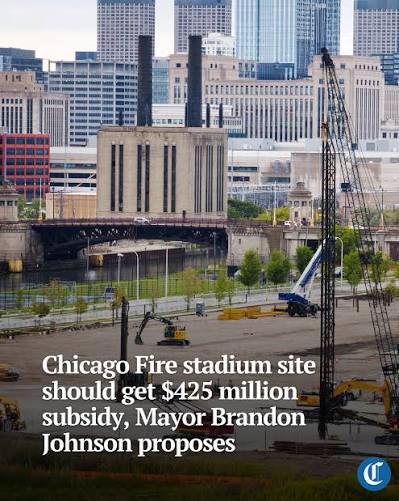
Besides, that is all fiction. Taxpayers are very a lot paying for this undertaking. Two weeks in the past, the mayor of Chicago requested the Metropolis Council to “approve a $425 million tax increment financing package tied to infrastructure” across the new stadium. Based on the Solar-Instances, this public cash was wanted to “unlock Mansueto’s planned (stadium).” As TheRealDeal.com requested in a narrative, why did metropolis leaders/crew executives pitch this undertaking as a “privately financed alternative” to different grasping sports activities homeowners when taxpayers will nonetheless be pressured to speculate closely into this stadium? Wait a second. About that $425M of TIF cash. Didn’t the identical developer strategy town eight years ago and declare that if a brand new stadium have been constructed on this land, he would want $450M in infrastructure prices? The town mentioned no and that it was an excessive amount of cash. The developer subsequently “promised a substantial reduction” the subsequent time he contacted town. However his latest supply was $425M. He initially mentioned $450M. Simply $25M much less? Was that his substantial discount?
To make issues worse, it’s extremely uncertain that taxpayers will see any income from these infrastructure prices, for instance new parking heaps. Each time I see quotes like “Revenue-sharing details have not been finalized”, it tells me that the crew will take each single income greenback. The crew merely doesn’t wish to point out that to the general public proper now. Moreover, aren’t the Hearth receiving almost $10M per year from McDonald’s for stadium naming rights? Can’t they use that cash for their very own infrastructure prices?
Fortunately, the Chicago Hearth don’t have a historical past of screwing over taxpayers. Oh wait, they do? In 2006, the Chicago Hearth opened their new stadium in Bridgeview, Illinois (15 miles from Chicago).
Taxpayers have been promised that:
- This venue would develop into an “economic anchor…that would pay for itself and spur development around it.”
- The utmost quantity of taxpayer cash spent on this undertaking could be no more than $55M.
- There was no method for taxpayers to lose money on this deal.
How did this work out?
- The stadium had zero influence on the encircling space and was a drain on taxpayers for a few years.
- The whole value to taxpayers for this stadium was at minimum $250M.
- The mayor paid an organization to put in writing a report that acknowledged how the stadium’s worst-case state of affairs, financially talking, had town breaking even. Like each different paid-for report executed by groups or proponents of recent venues, the info of the paper have been by no means primarily based in actuality.
None of that ever occurred and the stadium by no means “hit the economic goal promised by its proponents.” Native leaders have been pressured to take care of annual losses of $4M-$5M whereas residents noticed their property taxes raised three times in just 10 years.

A report by Commonplace & Poor estimated that every Bridgeview resident’s share of the debt burden was approximately $18,000. The town’s credit standing was drastically lowered to mere junk-bond status.
Again to in the present day, it seems some within the Chicago neighborhood are pushing back on giving any taxpayer cash to the brand new Chicago Hearth stadium or any of its outdoors prices.
