

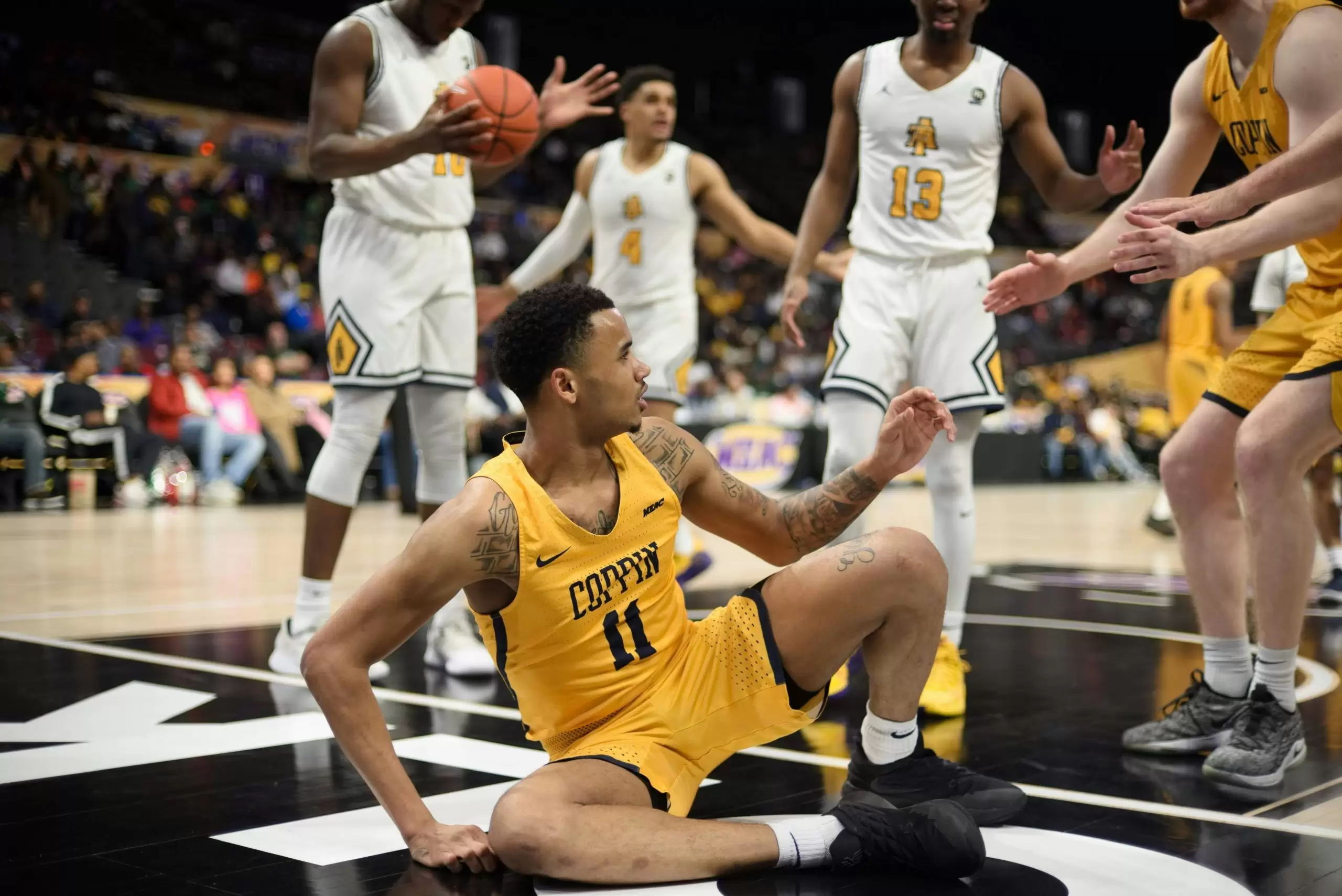
In fashionable basketball, accidents hardly ever arrive with out warning, but they proceed to derail seasons and careers. Dr. Abhinav Gautam, a regenerative care doctor and founding father of Nuoro, believes the reply lies in a system many athletes overlook: fascia.
Gautam’s work has been utilized by elite athletes throughout a number of sports activities, together with Candace Parker and Joe Johnson, with a concentrate on restoring motion reasonably than treating remoted ache. His method facilities on how the physique distributes drive, a precept that aligns instantly with basketball’s calls for for slicing, deceleration, and explosive change of route.

In an unique interview with TalkBasket.internet, Gautam detailed how frequent basketball accidents usually originate removed from the location of ache.
“Sure, these accidents are sometimes associated to fascia as expressions of a system downside. Fascia is the physique’s connective community, and it shops elastic vitality, transmits drive and coordinates motion. When fascia loses its potential to glide, drive will get redistributed right into a weak hyperlink, just like the ankle, knee or again. The ache exhibits up in a single place, however the restriction usually lives someplace else.”
That idea reframes how accidents ought to be evaluated, particularly in a sport the place repetitive load and asymmetry are fixed. As a substitute of focusing solely on strengthening a joint, Gautam factors to motion effectivity as the inspiration of sturdiness.
“It’s essential to have a look at and deal with the physique as an built-in system. Gamers ought to prioritize motion high quality – particularly rotation, deceleration and symmetry – over simply energy. Damage threat rises if vary of movement is uneven or mechanics break down beneath fatigue. Day by day habits ought to embrace restoring tissue high quality by way of hydration, restoration work and retraining clear motion patterns.”
The warning indicators, in keeping with Gautam, usually seem nicely earlier than a serious harm happens. In a league the place gamers ceaselessly push by way of discomfort, these alerts might be missed.
“Accidents hardly ever come out of nowhere. Early indicators embrace lack of explosiveness, lowered single-leg stability, asymmetrical loading and issue decelerating. When you really feel tight once more shortly after warming up, or your motion feels blocked on one facet, that’s a pink flag. For the Achilles particularly, you’re wanting on the complete elastic system. If that system isn’t absorbing and returning drive effectively, the tendon is in danger.”
These indicators are significantly related given the rise in lower-body accidents throughout basketball, the place the flexibility to soak up drive is as essential as producing it. Gautam’s technique focuses on restoring that steadiness at a structural stage.
“We’re centered on restoring fascia as a purposeful system. Meaning rehydrating tissue, restoring glide between layers and decompressing irritated neural interfaces, then instantly retraining motion so the physique adopts these modifications. We additionally use imaging like ultrasound to evaluate how fascia is transferring in actual time, mixed with movement evaluation. It permits us to intervene earlier than tissue failure to stop harm.”

From a basketball perspective, that emphasis on prevention might shift how groups handle participant workloads and restoration cycles. As a substitute of reacting to accidents, Gautam sees a future constructed on early detection and system-wide monitoring.
“The long run is predictive and systems-based. We’re transferring towards figuring out breakdown earlier than ache exhibits up. We are able to do that by monitoring fascial glide, motion asymmetries and cargo tolerance. Remedy will change into extra exact, combining regenerative approaches with neuromuscular retraining. We don’t wish to be solely reactive when we now have the flexibility to engineer resilience and maintain athletes acting at a excessive stage with out interruption.”
Because the bodily calls for of basketball proceed to rise, the margin for error narrows. Gautam’s perspective means that the following aggressive edge might not come from coaching tougher, however from understanding how the physique strikes as a whole system.
