

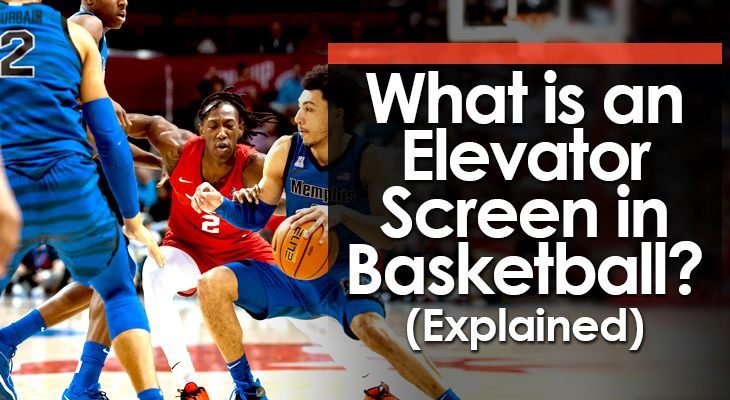
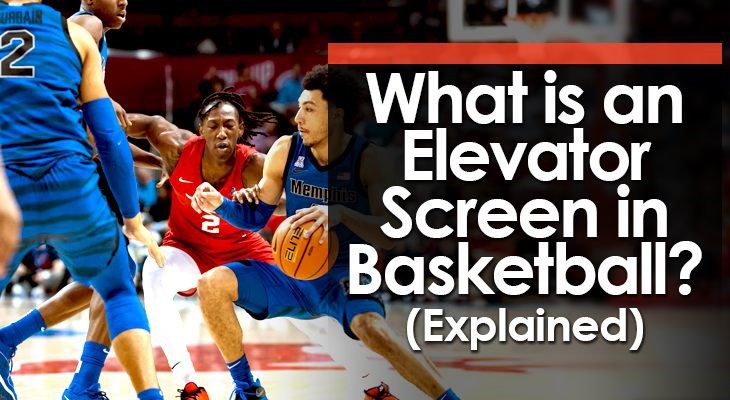
Basketball is stuffed with totally different sorts of screens that each one look to perform various things.
Cross screens attempt to get a participant open on the block…
Again screens liberate cutters to the basket…
And ball screens give a ball handler a bonus on their defender to assault the rim.
However in order for you a display screen to liberate a shooter for an out of doors shot?
Then an elevator display screen is what you’re searching for.
Under, we’ll break down precisely how this motion works, methods to run and defend it, and stroll by just a few play examples you should utilize together with your crew.
What’s an Elevator Display screen?

An elevator display screen is when an offensive participant (sometimes a shooter) cuts between two gamers earlier than they step collectively and shut the hole earlier than the defender can get by.
This could enable the offensive participant to obtain a move for an open exterior shot, as their defender obtained caught on the opposite aspect of the elevator display screen.
To make it much more efficient, the shooter will typically set a display screen himself earlier than operating by the hole, making it tougher for his defender to get better in time.
Why is it Referred to as an Elevator Display screen?
This specific motion is named an elevator display screen as a result of, as the 2 screeners step collectively to shut the hole, it appears to be like similar to elevator doorways closing.
What Makes an Efficient Elevator Display screen?
Whereas the elevator display screen itself is hard to defend, there are particular points of the motion that make it simpler for the offense:
1. Timing
That is the one most essential issue.
The 2 screeners and the cutter should be utterly in sync to create an open shot.
The screeners should time closing collectively on the display screen completely. In any other case, the defender will get by the hole to contest the shot or draw a moving screen foul in opposition to an offensive participant.
2. Participant Placement
The perfect setup is 2 publish gamers setting the display screen for a shooter chopping out to the perimeter.
Having a non-shooter get open on the 3-point line doesn’t actually stress the protection, and having guards set an elevator display screen for one more guard simply invitations a defensive swap.
Placing your gamers in the best spots maximizes the probabilities the elevator display screen will work and result in a high-percentage shot in your crew.
3. Start with One other Display screen or Misdirection

What makes this motion almost unstoppable is pairing it with an preliminary display screen or change of path.
Have the shooter set a cross display screen or again display screen earlier than operating by the hole, and his defender will virtually definitely get caught on the unsuitable aspect.
If the purpose of your elevator display screen is to open up a shooter on a wing, you’ll be able to start by dribbling the ball in the wrong way to carry the shooter’s defender within the paint, which is able to make the display screen simpler.
How can the Protection Overcome an Elevator Display screen?
It is a harmful motion, but it surely’s not unstoppable…
Listed below are just a few methods a protection can try to sluggish it down:
1. Ball Stress
The screening motion of an elevator display screen could also be a troublesome cowl, however a move remains to be required earlier than the motion really materializes into an open shot.
So when you can scout your opponent to know when an elevator display screen could also be coming inside their offense, you’ll be able to have your on-ball defender put additional strain on the ball and even shade the passer on one aspect to allow them to’t throw the ball to the shooter.
Many occasions, elevator display screen performs are inclined to deal with one choice, so in case your protection can take that major look away, the offense can wrestle to movement into one thing else.
2. Promote Out on Trailing the Shooter
This requires scouting, but it surely’s top-of-the-line counters out there.
If the defender stays glued to the shooter’s hip, there’s virtually no approach the screeners can shut the hole and set a authorized display screen.
Sure, your defender needs to be fast. However a dedicated path by the display screen is much extra disruptive than making an attempt to combat over it late.
This will open up one thing else if there’s a cross display screen or again display screen earlier than the elevator, however if you wish to deal with eliminating a glance off an elevator display screen, then an athletic defender chasing a shooter is a strong technique to do it.
3. Switching

Switching is not the primary choice right here as a result of it normally creates a mismatch… a publish participant caught guarding a shooter on the perimeter.
Nevertheless, when you have an athletic publish and know an elevator display screen play is coming, it’s attainable to carry out a fast swap to stop a simple look.
The best approach to do that is for the defender of the screener closest to the ball to change up and take the shooter, and the shooter’s defender to slip up and make contact with the screener.
If the swap occurs shortly sufficient, it may end up in a steal and a quick break layup.
Examples of Elevator Display screen Performs
1. Field Cross Elevator

A screen-the-screener sequence (cross display screen adopted by an elevator display screen) that places the protection in a no-win state of affairs.
The play begins in a field set with the wings on the blocks and the posts on the elbows.
1 initiates the play by dribbling to a wing.
This alerts 2 to step towards the assistance line to set a cross display screen for 3.
Relying on 3’s ability set, 3 can both reduce out to the nook or publish up on the block.
As 2 units up for the cross display screen, that alerts 4 and 5 to show in and get shut collectively to arrange the elevator display screen.
As soon as 3 clears 2’s shoulder, 2 runs as much as the highest of the important thing for a possible move and 3-point shot.
If there’s a swap on the display screen, 5 can dive to the block and publish up since he would now have a guard defending him.
2. Chin Elevator

A Princeton offense staple that turns a regular Chin reduce into an elevator display screen with minimal adjustment.
The offense swings the ball across the perimeter from 1 to 4 to three on the wing.
After making the preliminary move, 1 cuts off a again display screen from 5 above the elbow to chop to the ball aspect block.
As soon as the ball reaches 3 on the wing, 4 and 5 step right down to arrange the elevator display screen close to the ball aspect elbow.
1 shortly modifications path after touching the block and comes as much as the slot to get the ball again from 3 for a attainable exterior shot.
3. Horns Diagonal Elevator

This play makes use of misdirection to get the shooter open on the alternative wing… the protection is trying a method whereas the motion occurs the opposite.
The play begins in a Horns set with the posts above the elbows and the wings within the corners.
1 begins the play by throwing to 4 on the elbow and chopping right down to the sturdy aspect nook as 2 walks into the block.
Because the preliminary move happens, 5 units a pin down display screen for 3 to run simply above the free throw line to obtain a dribble handoff from 4.
After receiving the handoff, 3 takes one other couple of dribbles as 4 and 5 come collectively to arrange the elevator display screen for two.
2 runs by the elevator display screen to the alternative wing to obtain a throwback move from 3 for a attainable 3-point shot.
Conclusion
Of all of the screens in basketball, the elevator display screen is among the hardest to protect.
If the timing, placement, and setup are all there, it is virtually assured to supply an open look.
Seize one of many performs above, rep it at your subsequent follow, and watch your shooters begin catching the ball with no person inside six ft of them.
