


UFC middleweight contender Sean Strickland has voiced opposition to the Federal Communications Fee’s stress marketing campaign towards ABC that led to the indefinite suspension of Jimmy Kimmel’s late-night tv present. The controversial fighter defended ideas of free speech whereas denouncing authorities interference in broadcast programming choices.
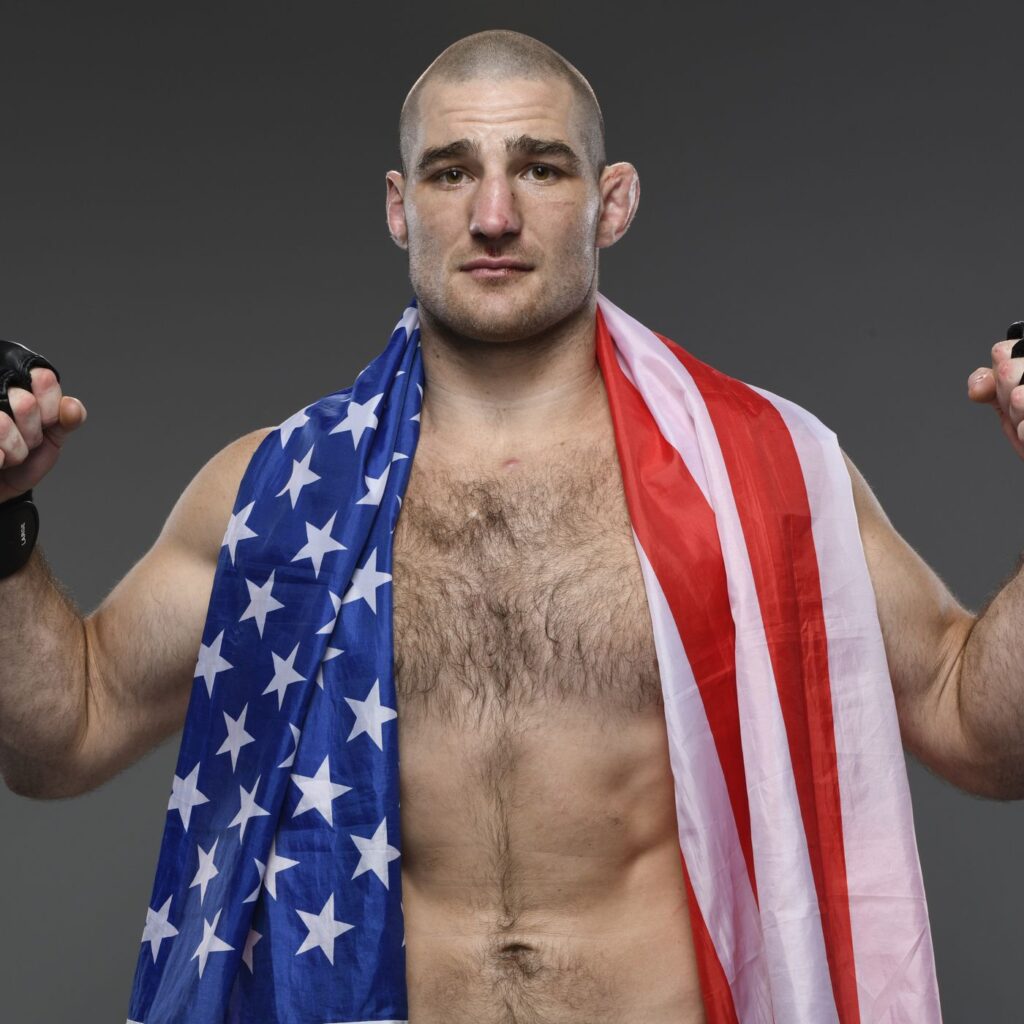
Strickland shared his position across multiple social media posts, stating that while he holds no personal affection for Kimmel, the FCC overstepped its authority in the situation. “Unpopular take but the FCC overstepped with Jimmy Kimmel… He didnt get canceled. ABC was threatened by FCC Chair appointed by Trump on a podcast,” Strickland wrote.
The 33-year-old California native, who at present holds the quantity three rating within the UFC middleweight division, emphasised that authorities businesses shouldn’t function political weapons. “F*ck Jimmy Kimmel however the authorities shouldn’t be used as a political weapon,” he added in his preliminary assertion.
Background on the Controversy
The dispute originated from remarks Jimmy Kimmel made throughout his Monday night time tv broadcast concerning the assassination of conservative activist Charlie Kirk. Kirk, the 31-year-old founding father of Turning Level USA, was fatally shot by 22-year-old Tyler Robinson throughout a campus occasion at Utah Valley College on September 10, 2025.
Throughout his monologue, Kimmel criticized what he termed “the MAGA gang” for trying to distance themselves from the shooter, stating they have been “desperately making an attempt to characterize this child who murdered Charlie Kirk as something apart from one in every of them”. Courtroom paperwork later revealed that Robinson had shifted towards leftist political opinions and focused Kirk resulting from his conservative messaging.
FCC Chair Brendan Carr’s Response
FCC Chairman Brendan Carr, who was appointed to lead the commission by President Trump in November 2024, appeared on conservative commentator Benny Johnson’s podcast Wednesday to handle Kimmel’s feedback. Carr characterised the host’s remarks as “actually sick” and prompt potential regulatory motion towards ABC and its father or mother firm Disney.
“We can do this the easy way or the hard way,” Carr warned during the podcast appearance. “These companies can find ways to take action on Kimmel or there is going to be additional work for the FCC ahead”.
The 46-year-old FCC chair has served with the commission since 2012 and contributed to the conservative Project 2025 policy document. His approach represents a significant shift in how the FCC exercises its regulatory authority over broadcast licensees.
Industry and Political Response
Within hours of Carr’s statements, main broadcast station house owners Nexstar and Sinclair introduced they might take away Kimmel’s program from their ABC-affiliated stations. Nexstar, which operates 28 ABC associates, described Kimmel’s feedback as “offensive and insensitive at a crucial time in our nationwide political discourse”.
ABC subsequently announced the indefinite suspension of “Jimmy Kimmel Live!” without providing specific reasoning for the decision. The network’s choice drew immediate criticism from lawmakers and free speech advocates who characterized it as capitulation to political pressure.
President Trump praised ABC’s action, writing on Truth Social that it represented “Great News for America” and claiming Kimmel had been terminated due to poor ratings. Some leaders called for Carr’s resignation, accusing him of corrupt abuse of power.
Sean Strickland’s Position on Government Overreach
Strickland provided additional context for his criticism of the FCC’s actions, explaining that Carr had threatened regulatory penalties throughout his podcast look. “On that podcast, FCC Chair Brendan Carr mentioned Jimmy Kimmel’s latest remarks and mentioned broadcasters want to reply both the simple approach or the onerous approach or else the FCC would possibly take regulatory steps,” the fighter wrote.
The UFC veteran has built a reputation for outspoken commentary on political and social issues throughout his career. Born in Anaheim, California in 1991, Strickland overcame a difficult childhood marked by domestic violence to become a professional mixed martial artist in 2008. He captured the UFC Middleweight Championship in September 2023 before losing it to Dricus Du Plessis in January 2024.
Legal and Constitutional Concerns
First Amendment experts have criticized Carr’s actions as potential authorities overreach that threatens free speech protections. The Basis for Particular person Rights and Expression characterised the FCC chairman’s habits as “unconstitutional jawboning” – the improper use of threatened authorities motion to realize coverage goals.
Legal scholars noted that while the FCC maintains authority to regulate broadcast licensees under the “public interest” standard established by the Communications Act of 1934, this power has constitutional limitations. The agency’s own website acknowledges that “the public interest is best served by permitting free expression of views” rather than suppressing speech.
The controversy has raised questions about the Trump administration’s approach to media regulation and the appropriate boundaries of FCC authority. Critics argue that using regulatory pressure to influence programming decisions sets a dangerous precedent for government control over broadcast content.
Brendan Carr
Brendan Carr is considered a close ally of Donald Trump. Trump first appointed Carr to the Federal Communications Fee as a Republican commissioner in 2017 throughout his first presidency. In November 2024, Trump then elevated Carr to chairman of the FCC, calling him “a warrior for Free Speech” and praising him as somebody who “has fought towards the regulatory Lawfare that has stifled People’ Freedoms.”
Most lately, Trump publicly praised Carr’s aggressive method to media regulation, stating “I believe Brendan Carr is excellent. He’s a patriot. He loves our nation, and he’s a troublesome man” in response to Carr’s actions towards Jimmy Kimmel.
Carr authored the FCC chapter for Project 2025, the conservative Heritage Basis’s coverage blueprint for a second Trump administration. In his chapter, he outlined plans to “rein in Large Tech” and regulate what he characterised as censorship by know-how and media firms. This contribution considerably raised his profile inside conservative circles and demonstrated his alignment with Trump’s coverage agenda.
Since changing into FCC chairman, Carr has pursued investigations and actions that intently mirror Trump’s said grievances towards media firms. He has threatened regulatory motion towards broadcasters that air content material critical of Trump.
